



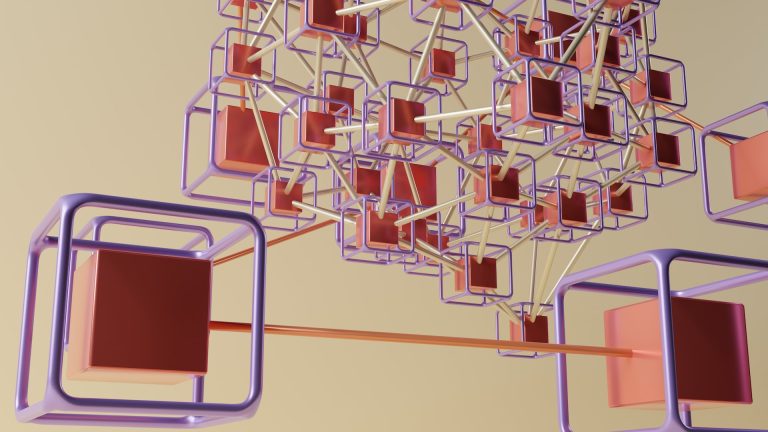
The solution to this predicament is — drumroll, please — Web3. Web3 is being built, operated, and owned by its users as opposed to the current, centralized “Web” that has been dominated by large technology companies for almost two decades. When it comes to Web3, the users are in control, not corporations.
So, what exactly is Web3? In this article, we’ll talk about that and why it’s become ever-more important in this day and age.

In its current state, Web3 lacks a concrete definition. However, in the grand scheme of things, Web3 is essentially the “new” version of the internet — the future of the World Wide Web. It’s a catch-all term used to encompass the core ideas of Gavin Wood, a co-founder of Ethereum and the Web3 Foundation, who saw the future of the internet as decentralized.
Web3 is an evolution of the internet that draws on its predecessors while also introducing new features. This network is often referred to as the “read-write-own” or “read-write-execute” version of the World Wide Web. We are already witnessing the beginnings of the themes that will define the Web 3.0 landscape, including decentralization, privacy, machine learning, and security.
Web3 is based on the premise that consumers should be vested with some degree of control over their data and hence employs blockchains, cryptocurrencies, and NFTs to achieve this goal.
But before we look to the future with Web3, let’s first glance at the past and the current versions of the internet — Web 1.0 and Web 2.0.
Over in Geneva, Switzerland, in 1989, Tim Berners-Lee was hard at work on the protocols that would become the World Wide Web. It may come as a surprise to learn that his first concept was to develop decentralized, open protocols for global data sharing. Does that ring a bell?
Berners-Lee’s original concept, nowadays generally known as “Web 1.0,” emerged sometime between 1990 and 2004. Web 1.0 was characterized by primarily company-owned, static websites and virtually no user engagement; users rarely created material, hence the term “read-only web”.
Web 2.0 started in 2004 when social media was introduced. The web has progressed from being “read-only” to becoming “read-write”. Companies shifted their focus from solely supplying material to users to also facilitating user-to-user communication and content sharing.
As more individuals got access to the internet, a small number of corporations started to amass an increasingly large share of the web’s traffic and economic output — we all know who they are. Although users had the ability to contribute content, they had no control over it or say in how it was monetized. The advertising-based business model is another offspring of Web 2.0, which then popularized the term “the users are the product” as companies started to utilize user data to sell hyper-targeted ads to more-than-keen buyers.

To put it simply, Web3 wants to be an upgraded version of the web, with the primary goal being to provide users complete control over their online experience. It aims to give people more say over how their data is used and distributed online and who gets to profit from it. Web3 is an important step for the evolution of the internet because users can take back control of their data and their content from the companies who currently run the landscape.
In the Web3 era, users earn money for the amount of time and data they consume online. The fact that Web3 has a built-in payment system that allows users to transfer money to one another without going through a financial institution or any other intermediary is very exciting. Web 3 does this by utilizing blockchain and cryptocurrency technology to produce a decentralized form of ownership.

The concept of a decentralized Internet, in which the ability to exercise control does not rest with a select few individuals, groups, or institutions, is central to the conception of Web 3.0. Web3’s foundational infrastructure is built on blockchain technology, which provides users with unparalleled levels of safety, transparency, and immutability.
However, at its very core, there are five main ideas that Web3 are:
Decentralization is fundamental to the next generation of the Internet. Data in Web 2.0 is typically stored in a single central location, accessible via a single server, and accessed by computers via the Hypertext Transfer Protocol (HTTP) via specific web addresses. The decentralized nature of Web 3.0 is a result of the fact that information would be located based on its content, allowing for storage in numerous locations at once. This would dismantle the vast datasets owned by internet behemoths like Meta and Google and give power back to the general public.
In the era of Web 3.0, users will be able to sell the data they generate from their various and increasingly potent computing resources, such as mobile phones, desktops, appliances, vehicles, and sensors, through decentralized data networks while still maintaining full ownership of their data.
The advanced safety and openness of Web 3.0’s network come from its decentralized nature and the use of blockchain technology. The blockchain records every transaction and makes it impossible to steal or alter any of the information. In addition, Web3’s decentralized design offers it a stable platform for growth in the user community.
Web3’s foundational infrastructure is built on a foundation of incentive mechanisms and open financial processes. The system doesn’t need external resources that would otherwise be required by a centralized cluster. With the advent of Web3, the network will facilitate user-to-user communication without the need for an intermediate.
As a result, Web3 advocates for a trustless interface in a distributed, decentralized system. With the top blockchain certification training, blockchain developers can build a trustworthy network for Web3 consumers.
Web3 allows for unrestricted access to the web’s vast array of online resources. It opens the door for everyone to join the cutting-edge Web3 community and take advantage of the boundless possibilities it presents. Everyone has an equal chance of benefiting from Web 3.0’s decentralized economy.
Blockchains, decentralized peer-to-peer networks, or a hybrid of the two will power the applications that power Web 3.0 that will make a permissionless internet possible.
In the world of Web3, people no longer use the antiquated banking and payment processing infrastructure to make purchases and send money online. Instead, they use cryptocurrency. The distributed web cluster is working to lessen reliance on traditional, sometimes predatory financial institutions.
As a result, this contributes to the swiftness, safety, and efficiency of financial dealings.

According to Merriam-Webster, decentralization is defined as “the dispersion or distribution of functions and powers”.
Decentralization in the context of blockchain technology and Web3 is shifting the locus of power and authority from a single entity — such as a person, group, or organization — to a decentralized system. A key goal of decentralized networks is to limit the amount of mutual trust between users and to prevent users from abusing their position within the network to harm other users or the network’s overall performance. As we’ve mentioned before, decentralization is a key component of the upcoming Web3 landscape.
The idea of decentralization is not new. Technology solutions often employ one of three network architectures: centralized, distributed, or decentralized. While decentralized networks are commonly used in blockchain systems, this does not mean that blockchain technologies can be easily classified as decentralized or not. Instead, decentralization should be enforced uniformly across a blockchain’s functionality.
Decentralizing administration and access to application resources through open-source technologies will allow for greater and more equal service. Although there are certain disadvantages to decentralization, like slower transaction throughput, it is often preferred because it enhances reliability and quality of service.

With Web3, data is protected from unauthorized modification or deletion via cryptographic hashing and other measures. Security on the Web3 landscape, in brief, will rely on cryptography for encryption. It basically makes sure that only the intended parties have access to the data.
We already encrypt our data to keep it safe online in the current Web 2.0 landscape, and as the internet develops, we’ll utilize encryption to guarantee that information can be shared openly while still remaining privately owned.

Due to their foundation in consensus, cryptography, and decentralization, the data structures utilized by blockchain technology inherently possess high levels of security. Due to the interconnected nature of the blocks, it is extremely difficult to modify the data, which greatly reduces the risk of fraudulent transactions and data theft. And thanks to multiple layers of encryption, the blocks on the blockchain are inherently secure, and its data will remain private unless specified by the user.
Through the use of private and public keys in blockchain transactions, people can exercise ownership over their data. Third-party middlemen are not permitted to misuse or gain information — as with the internet of today. If private information is kept on a blockchain, its owners can decide who can view it and under what circumstances, rather than a third party making the decision for the users.

To put it simply, progress can’t happen without adequate infrastructure. The term “digital infrastructure” has come to mean the network of computers, servers, and networks that make up the Internet.
What we now call “digital infrastructure” refers to the physical components and supporting services of the internet. From physical assets like cell towers and fiber optic networks, digital infrastructure has evolved in recent years to include “up the stack” technologies like the cloud, data centers, and managed networking software.
All the pieces of hardware, blockchains, and other components of the blockchain technology stack are together referred to as Web3 infrastructure. To clarify, when we talk about “Web3 infrastructure” here, we’re referring to the resources that programmers need to create and maintain decentralized applications. It’s important to note that there is not yet a standardized way to describe or classify blockchains. As a result, it’s not uncommon for there to be a plethora of synonyms for the same concepts.
However, CoinDesk has attempted to standardize and define Web3 in a more concrete way through its Digital Asset Classification Standard (DACS), and it remains the only documentation out there that has attempted to do so.
In a nutshell, the DACS defines that Web3’s infrastructure will be a combination of six “sectors”:
Let’s take a look at the four biggest components of the Web3 infrastructure:
In the field of computing, we would see the implementation of protocols that are primarily concerned with facilitating the infrastructure of Web3 and distributed computing. Services like cloud storage, computing, networking, and databases are among those they hope to decentralize and cut out the middlemen for. If these protocols succeed in their missions, the members of the network will once again be the legal proprietors of their data and information. Some of these Web3 tools even provide users with the opportunity to generate income by participating in the infrastructure’s operation.
Within the landscape of Web3, fiat currencies will no longer be the norm. Instead, Web3 will run on a currency that is innate to its systems — cryptocurrencies.
To put it simply, Web3 creates cryptocurrencies which are digital currencies that can be used instantly on a worldwide scale and, more importantly, without the need for any third-party authorization. New business models can emerge as a result of the proliferation of micropayments, and governments will have no power to manipulate the state of cryptocurrency. This pillar of the Web3 infrastructure works almost in tandem with that of the next — DeFi.
Another facet of the Web3 infrastructure is DeFi. Margin trading, stablecoins, decentralized exchanges, and prediction markets are all examples of decentralized finance (DeFi). Peer-to-peer (P2P) transactions facilitated by blockchain technology form the basis of this innovative approach to banking and financial services.
DeFi utilizes the blockchain to facilitate “trust-less” banking, doing away with the need for intermediaries such as banks and brokers that are part of the centralized finance (CeFi) system. Providing underserved regions with easy access to digital assets and financial tools has made DeFi a potent instrument for promoting financial inclusion.
Smart contracts are basically blockchain-stored computer programs designed to execute at a defined time. In most cases, they are utilized to eliminate the need for a third party during the execution of a contract, allowing all parties to the agreement to know the outcome without any delay or uncertainty. They can also automate a process by causing one action to lead to another automatically.
Coded “if” and “when” expressions on a blockchain are what make smart contracts tick. When the prerequisites are met and verified, the activities are carried out by a network of computers. Money transfers, vehicle registrations, email alerts, and ticket issuance are all examples of what may fall under this category. When the transaction is finalized, the blockchain is updated. This indicates the transaction is final and can only be viewed by those who have been given access.

We’ve come a long way from the days when all we had online were long paragraphs of text and still images. The way we use the internet and communicate with one another in recent years has evolved since the advent of interactive media such as videos and social networking sites. But there is still a great deal of space for development, which the advocates of Web3 are looking to provide.
As the third iteration of the World Wide Web, Web3 has the potential to radically alter the way we use the web. In keeping with the spirit of the decentralized web, it places greater agency over users’ assets, data, and privacy. Web3 also promises to increase accessibility and inclusion by making the web available to those who currently lack that opportunity.
DeFi and cryptocurrency aside, Web3 will also expand upon blockchain technology by giving programmers a space to work on and distribute their own decentralized programs (dApps). The fact that these dApps are distributed throughout a distributed network of computers makes them more secure and less susceptible to censorship and fraud.
Web3 has immense promise and will fundamentally alter our experience of the internet. In order to see where this new technology goes in the years to come, monitoring its progress and development is essential. And, when that time finally comes, we should be ready to embrace Web3 wholeheartedly.

Change may be a scary thing, but there is oftentimes a crucial need for it to happen — especially when it comes to the landscape of the World Wide Web. Web3 looks to flip the internet over on its head, but with it come many benefits that can be enjoyed by those who look to welcome it with open arms.
Here are some of the biggest advantages of Web3:
On a list of the greatest benefits brought about by Web3, the ability to facilitate frictionless communication between users would take top billing. Web3 expands on the permissionless feature of blockchain to remove the need for a centralized authority to regulate user access. Web3 accessibility may be improved by using public blockchain networks as the underpinnings of Web3 applications.
To put it another way, users wouldn’t have to worry about being denied access to digital services due to factors like their socioeconomic background, sexual orientation, or physical location. The fundamental architecture of Web3 allows for the efficient and rapid global transfer of digital assets, wealth, and information. Users of Web3 will have more autonomy to realize the full potential of the web because no single entity will be responsible for processing transactions.
Consider the websites, apps, and social media sites you often employ. When signing up for a variety of services, you may be asked to enter your personal details on multiple websites. You use social media platforms like Facebook and Instagram to share content such as photos and videos — along with your thoughts and opinions. Amid this, you probably thought your Amazon account data and Facebook profile photos were safe and within your control. Not even close to being accurate, unfortunately.
Tech conglomerates in the Web 2.0 era often collect, store, and sell user-generated content for profit. With Web3 enabled by blockchain, people will have complete control over the information they share. You’ll have control over what personal data you make available to marketers and advertisers — if at all.
The promise of higher security is yet another significant benefit of utilizing Web3. Blockchain could provide the guarantee of decentralization and cryptography to ensure safeguards for user data. Privacy and security are core principles of Web3, and that will forever give it an advantage over the current security landscape of the internet.
Blockchain is innately immune to standard security flaws due to its design and consensus procedures. New security solutions and best practices have evolved to address the problems associated with hacking Web3 apps and systems, thanks to the very nature of Web3 that runs on blockchain technology.
Web3’s open-source nature allows for the easy incorporation of new features and the modification of existing ones. Web 3.0 is built out of Lego-like blocks, where any component can be connected to others and reused in novel ways, as opposed to Web 2.0’s model of restricted API access. The term for this is “composability.” As a result, it becomes simple to come up with novel, high-value ventures by piggybacking on existing ones.
Web3 also uses a Decentralized Autonomous Organization (DAO), a novel kind of organization whose management is governed by rules encoded in code rather than by board members and directors. Because of this, there can be an infinite number of participants to shape the landscape of the internet.
In a decentralized network, consumers can see the source code of the services they use and keep tabs on their data in real-time. Nobody involved will ever be in the dark about the money and worth they bring to the table. Getting your hands on this information will not necessitate going via a third party, and they will never be able to touch or utilize your data without your explicit permission.

While we would love to claim that Web3 is without flaw, the idea of Web3 as it currently stands isn’t perfect — although it never claims to be. It still seems like a long time before the internet as we know it is able to evolve into Web3.
Here are some of the main disadvantages of Web3 implementation:
The current idea of the Web3 landscape relies on powerful devices to not just create but to run it, too. Many crypto, DeFi, and Web3 applications may not gain significant traction outside of those who are already crypto–native due to the current state of the industry, which features multi-step processes and poor user interfaces. The process of acquiring a cryptocurrency wallet, the first step for most people to take before accessing Web3, can be challenging, especially for older generations, even those who are quite adept at using Web2.0 applications.
Plus, there is currently a high cost of entry. Those looking to invest modest sums in DeFi protocols or merely hold their own assets will find that running costs consume a large chunk of their returns. A new user, for instance, may have to pay a fee of 10-15%+ of the total transfer amount if they utilize their Coinbase account to send funds to their non-custodial wallet. Despite the common belief that using a cryptocurrency will lower transaction costs, the fees associated with doing so are staggeringly higher than those associated with any other type of financial transaction.
Despite the benefits, criminals and governments can exploit cryptocurrency and DeFi technologies. This includes money laundering and hacking exchange, and DeFi protocols. According to blockchain data analytics business Chainalysis, criminals laundered $8.6 billion in crypto in 2021.
While blockchain-based transactions can be traced and much knowledge is public, cryptocurrency-based money laundering will certainly increase in the near future, especially with the popularity of privacy-based cryptos like ZCash.
North Korea has been utilizing bitcoin transactions to support government operations, including its nuclear weapons program, experts say. The FBI recently claimed that the Lazarus Gang, a North Korean hacker group, was behind the $615 million hack of Axie Infinity’s blockchain bridge. As it stands, there is difficulty in preventing so-called “lawless” behaviors in the Web3 landscape.
While this point mainly relates to cryptocurrencies, its implications can be extended to the entire Web3 ecosystem. The blockchain-based cryptocurrencies that underpin the budding Web3 ecosystem have the ability to generate new sectors, employ millions of people, and change our financial system for the better. Fear could lead to a catastrophic meltdown and substantial economic upheaval for the economy as a whole, especially since crypto is far more volatile than equities, bonds, and real estate.
Stablecoins, a $180 billion market, add to overall volatility and systemic risk. This is especially true for unbacked, algorithmic stablecoins like TerraUSD (UST), which have regulators scared that a “run” on these coins could affect the U.S. dollar’s price and stability. All cryptocurrencies have witnessed two massive “flash crashes” in the last 12 months: a $400 billion crash in December 2021 and a $1 trillion crash in May 2022. As of writing, the cryptomarket has not yet recovered from those devastating crashes.
Because of this concern about being left behind, conventional financial institutions are making a concerted effort to adopt “central bank digital currencies” built on the blockchain, also known as CBDCs. CBDCs would have none of the advantages of decentralized cryptocurrencies due to their centralization and the same inflationary pressures as the fiat money they represent. Over 90% of global GDP is represented by nations with CBDC research programs, and seven countries now have CBDCSs in operation, with many more running pilot programs.
CBDCs may not aid users in any meaningful way, but they can certainly do them harm since it threatens the very core aspect of the Web3 landscape — decentralization. The ability of governments to immediately trace every transaction made by any individual, at any time, with no requirement for a warrant, court order, or any form of cybersecurity probe, has led several experts to warn against the adoption of CBDCs.
Because of the current high barrier to entry and especially due to the need for more powerful (and currently expensive) technologies to run Web3, this great evolution of the internet landscape may never come to fruition. We might have a few tasters of what the world of Web3 may look like — thanks to the increased accessibility of cryptocurrencies and non-fungible tokens (NFTs) — but the reality could be that everything that we have now may just integrate itself into the current state of the World Wide Web rather than be the norm.
Throughout this comprehensive look at Web3, we hope that the idea and potential of what many are touting to be the “future of the internet” have piqued your interest. Like we said earlier, change can seem like a scary thing, but the promise of a more secure, privacy-first, decentralized internet landscape is something that we’re more than happy to support.


